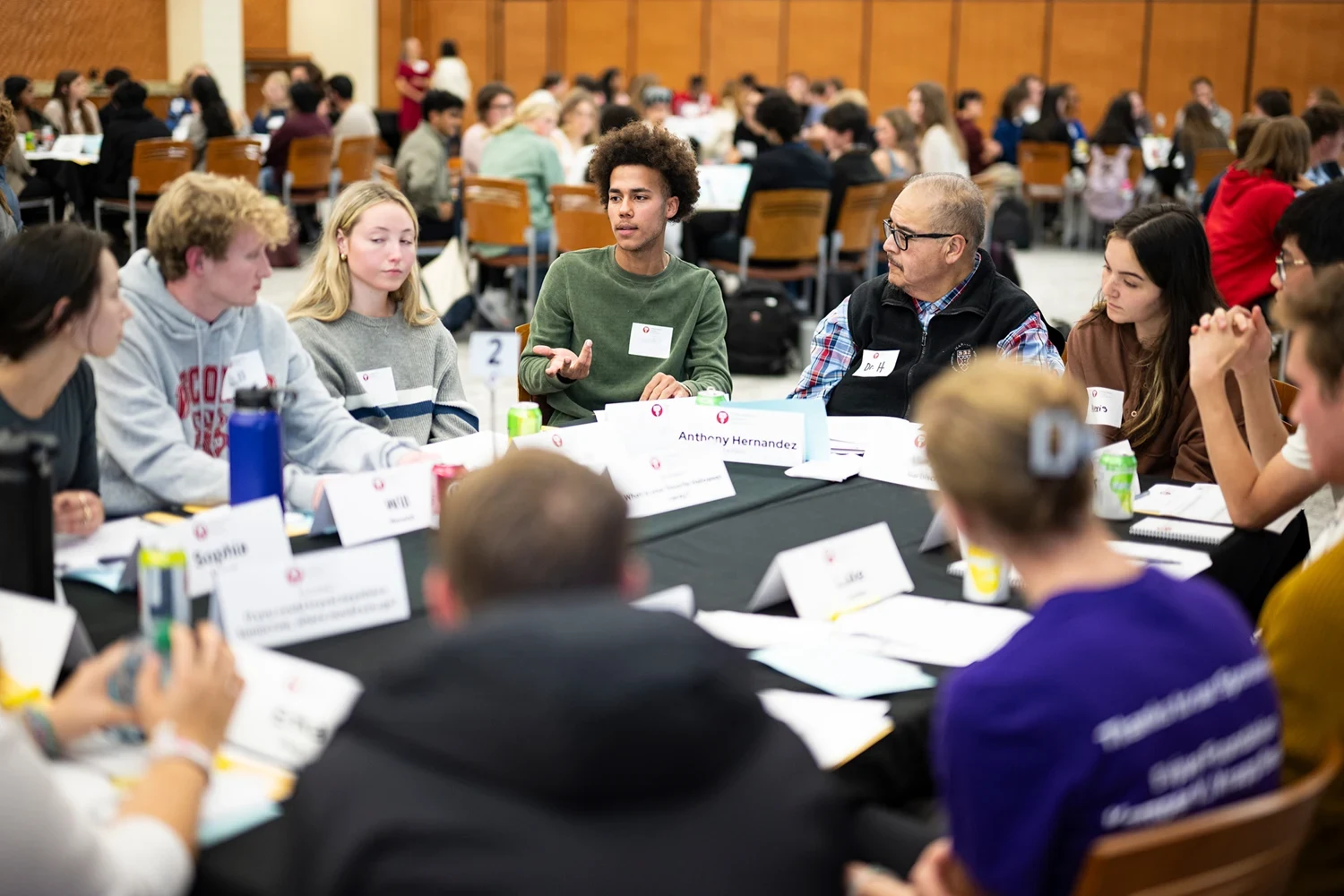
An initiative that gives undergraduates with diverse perspectives an opportunity to deliberate on important political issues.
Bringing together UW–Madison undergraduates
The Deliberation Dinners provide UW–Madison undergraduate students the opportunity to engage in a setting that exposes them to multiple perspectives and competing ideas.
Begun by former School of Education Dean Diana Hess, this initiative is part of The Wisconsin Exchange, which aims to enhance viewpoint diversity across campus, promote vigorous discourse and debate, and intensify our campus culture of civil dialogue among people from many backgrounds, viewpoints, identities, religions, political perspectives, and ideas.
In the 2025–2026 academic year, students will participate in small groups with a trained facilitator for six dinners.
How can I get involved?
Undergraduates who had not participated in the past and would be on campus for both semesters in the 2025-2026 academic year were invited to apply at the beginning of the fall semester. Although application does not guarantee selection, 375 undergraduates enrolled for the academic year.
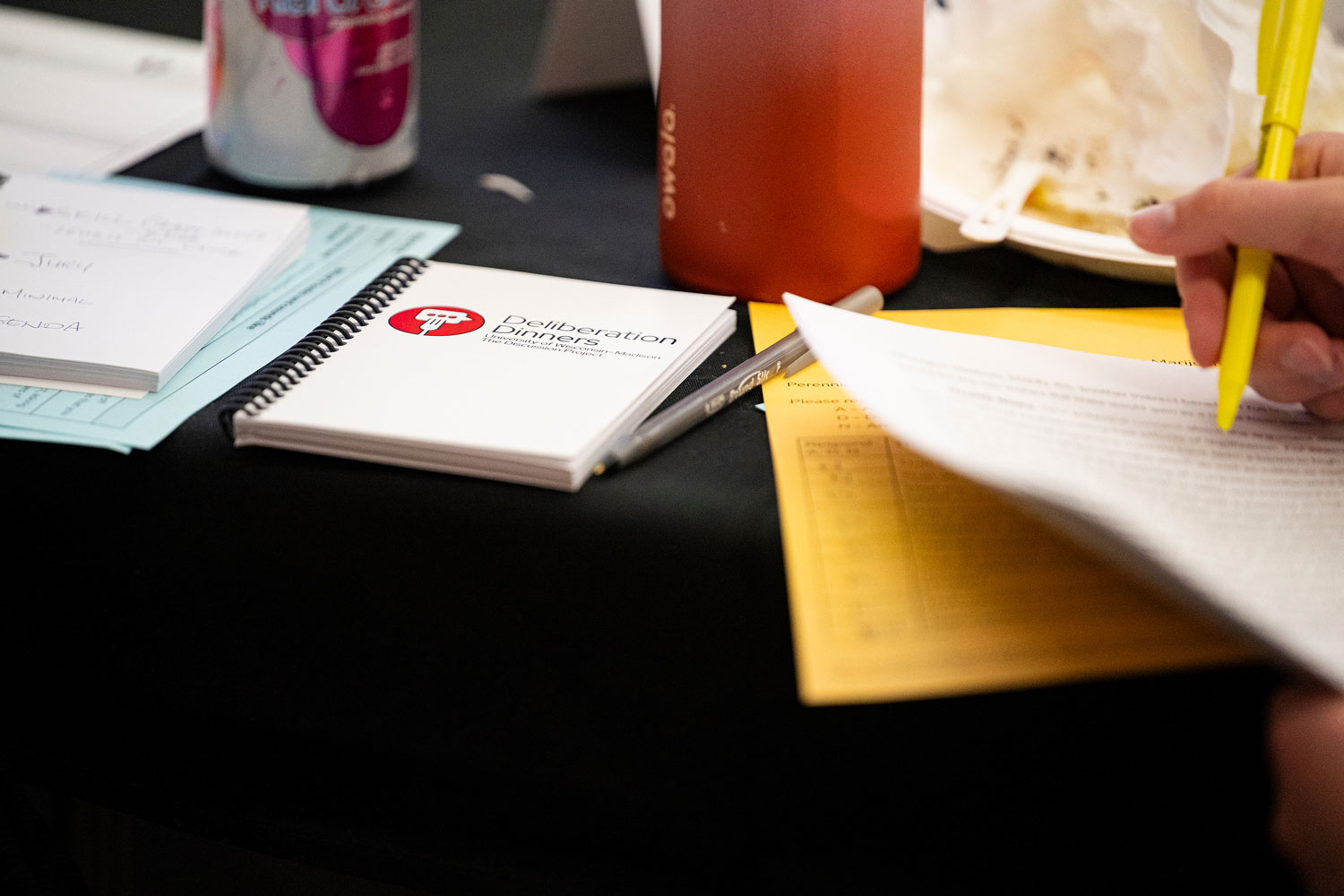
Topics for the 2025-2026 Academic Year
- Should marijuana be legalized, regulated, and taxed in Wisconsin?
- Should U.S. citizens be required to vote in elections?
- What should Wisconsin do about school vouchers?
- Should Wisconsin change its gun regulations?
- What abortion policies should Wisconsin have?
- Immigration: issue question TBA
How does it work?
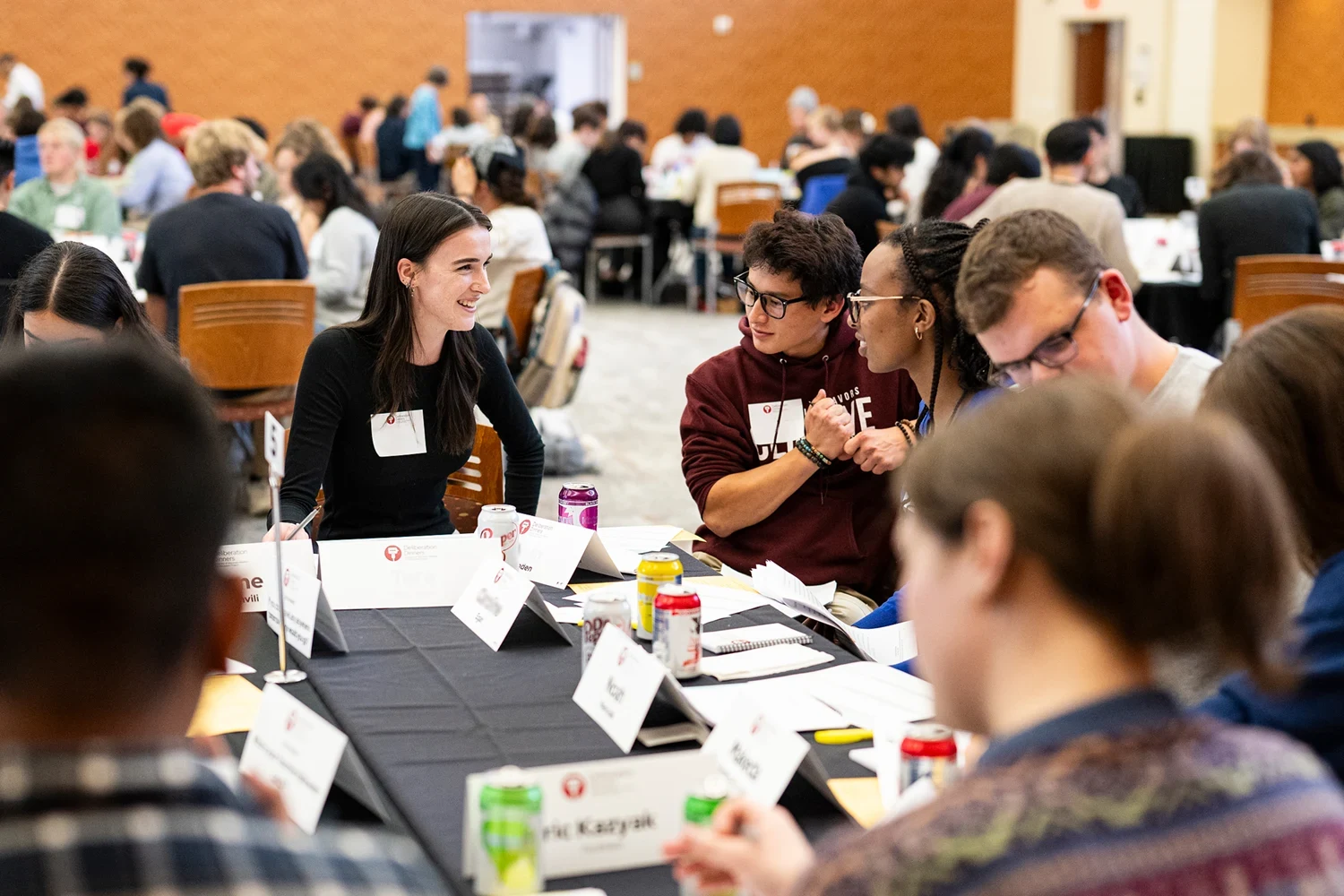
Dinners are held on the UW–Madison campus in September, October, November, January, February, and March. Beginning with a buffet dinner, the evening flows into a warm-up discussion, a deliberation centered around one specific topic per event, and ends with a debrief of process and ideas. On students’ way out the door, they are asked to complete a survey to help Deliberation Dinners to continue improving.
Each table group of 10 students is matched with one UW–Madison faculty or academic staff member who facilitates the discussions. All facilitators have received specialized training in discussion pedagogy through our sister project, The Discussion Project.